
Video
Perspectives on Talent | Navigating the HR Landscape
Description
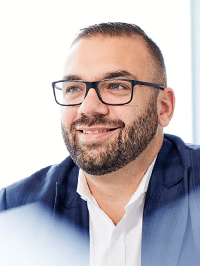
The HR landscape is rapidly changing – hear how Wilson's VP of HR, Benjamin Langner, discusses how to keep the "human" aspect in human resources. You'll learn his take on how to stay human in an ever-changing world by not outsourcing relationships, and how Wilson's achieving this in its day-to-day work with team members and clients.
-
Transcription
Yes, my name is Ben Langner. I'm the vice president of human resources at Wilson. I am based in the United States and I lead our global HR function. So that spans everything from total rewards, TA, people systems, ⁓ talent development, HR operations. And my real focus at Wilson is scaling our people infrastructure to drive performance across the business.
HR has changed in a lot of ways over the last few years. think primarily policy-driven to performance-driven The expectations for HR teams have evolved into being super fast, use data, AI, design people systems that derive direct business outcomes. And I think that's here to stay.
I think the biggest challenge everybody in the HR space is facing right now is keeping the human and human resources. There are so many different things going on in the world. We're accelerating AI at a rate I don't think anybody really truly anticipated. And at every corner, the human part of this function is being tested to be automated, Data-driven and I think right now the biggest challenge for most HR professionals is to stay human in an ever-changing AI world.
our organization does a really good job of not diving into new technology, AI technology because of hype, and I think that's a really key piece. We are really focused on the humans and the human aspect of how we continue to deliver for our business and our clients, and I think that kind of sets us apart from some of the organizations that I've seen and I'm sure you guys have seen as well. We don't just dive in because it's the new and trendy thing. We really try to focus and understand what's the business ROI, what's the human ROI to a decision like this.
I wish more people understood that HR isn't just about people issues. It's truly about business issues and how we take our people and leverage them to drive better business outcomes.
Build systems that scale humanity, automate the noise, don't outsource the relationships. Humans want to speak with humans. There's a lot of admin work that can be done by AI or technology, but the human part of all of this needs to remain and can't be outsourced. So those relationship pieces are really key. The future of HR really depends on those pieces.
Data fluency, you need to know data. If you don't like data, start liking data in HR. We have been buried in data for the last decade, longer than that. And today we have tools and technology that allow us to give our business real-time insights. If you don't know how to utilize data, you need to learn that skill right now.
One trend that excites me is the concept of skills-based workforce design. it's challenging businesses to think beyond just job titles and really look at skill set. I really like that trend. ⁓ that I think might be overhyped is AI in general. I don't think there's a lot of strategy behind AI yet. So there's a lot of headline news about AI this, AI that, but tech is only as good as the human steering it.
So what we did at Wilson, we simply started having conversations with the business leaders around our business and truly understanding what the skills for them and their teams were important. From there, we developed what we as an HR team felt important from like a baseline perspective of what skills somebody needs to have at this organization to be successful, whether you sat on the innovation team, the HR team, the finance team, the delivery team, there's just a of a minimum expectation skill set that one has for Wilson to be successful. And then from there, we've been able develop a little bit more niche skill set framework for specific parts of our business. And that's just expanded on kind of the defined minimum expectation from a skill set perspective for our organization So that's where we started. It's gone really well. There's still a bunch of stuff we have to do but those are, those are the stepping stones that we took initially from a skills framework perspective.
Over the next few years, I really think the HR landscape is gonna turn into product management and not service management. And I've started to see that a lot over recent years. We need to be able to measure those, design those with user experiences in that main shift, product management into no longer service management is one of the evolving things that we'll see continue to grow and develop over the next couple of years.
If you're interested in learning more about HR, check out our latest content.
More on HR leadership
Check out ways to stay competitive through connected leadership and a sustainable workforce strategy.
SHARE: